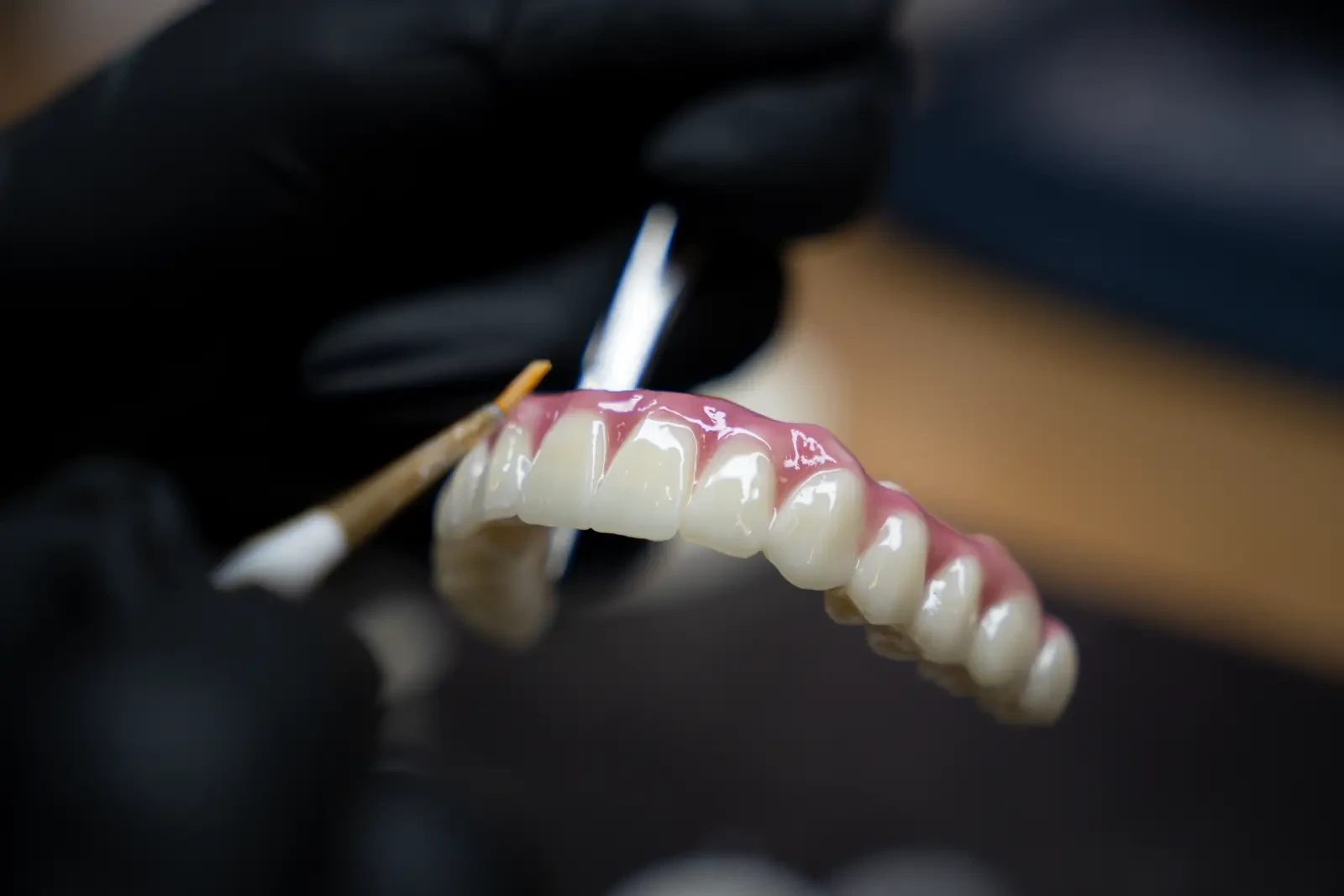
Full-arch implant-supported rehabilitations are one of dentistry's most complex and delicate disciplines. In this process, the most critical crossroads the clinician faces is the restoration's substructure material. Today, All-on-X ZR (Full Zirconia) and All-on-X MD (Metal-Supported Ceramic) systems find their place in different indications. As Maestro Dental Laboratory, we see this choice not merely as a material preference, but as an "engineering decision" extending from the patient's chewing forces to the smile line. Since using the right material in the wrong case can lead to implant loss or restoration fracture in the long term, the expert dental technicians in our laboratory meticulously analyze every parameter during case planning.
Fundamental Structural Differences and Material Engineering
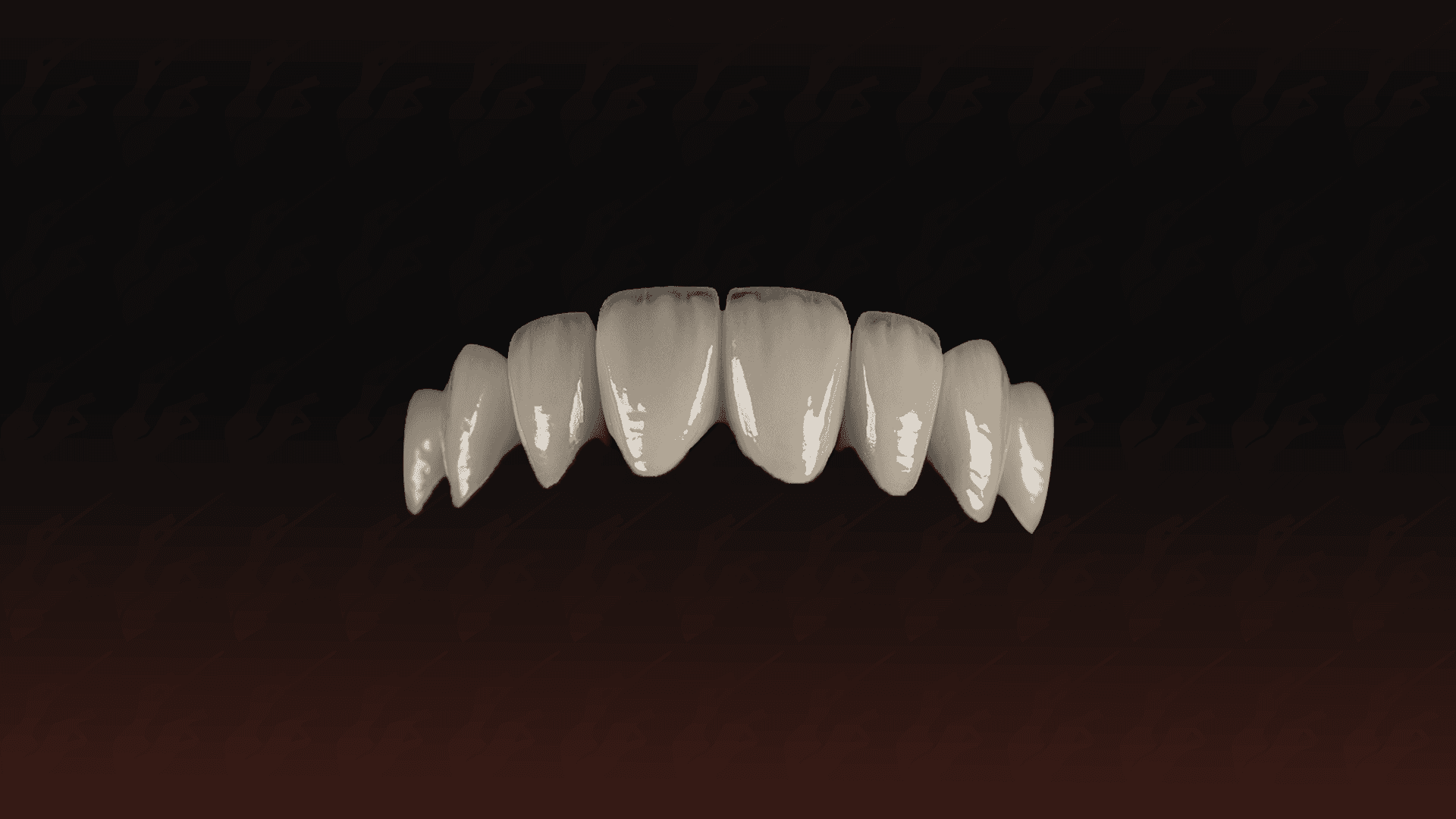
All-on-X ZR restorations are metal-free structures entirely milled from zirconium dioxide blocks with CAD/CAM technology. In these systems, monolithic or porcelain layering options are available. With light transmittance closest to natural teeth, this material is unmatched aesthetically.
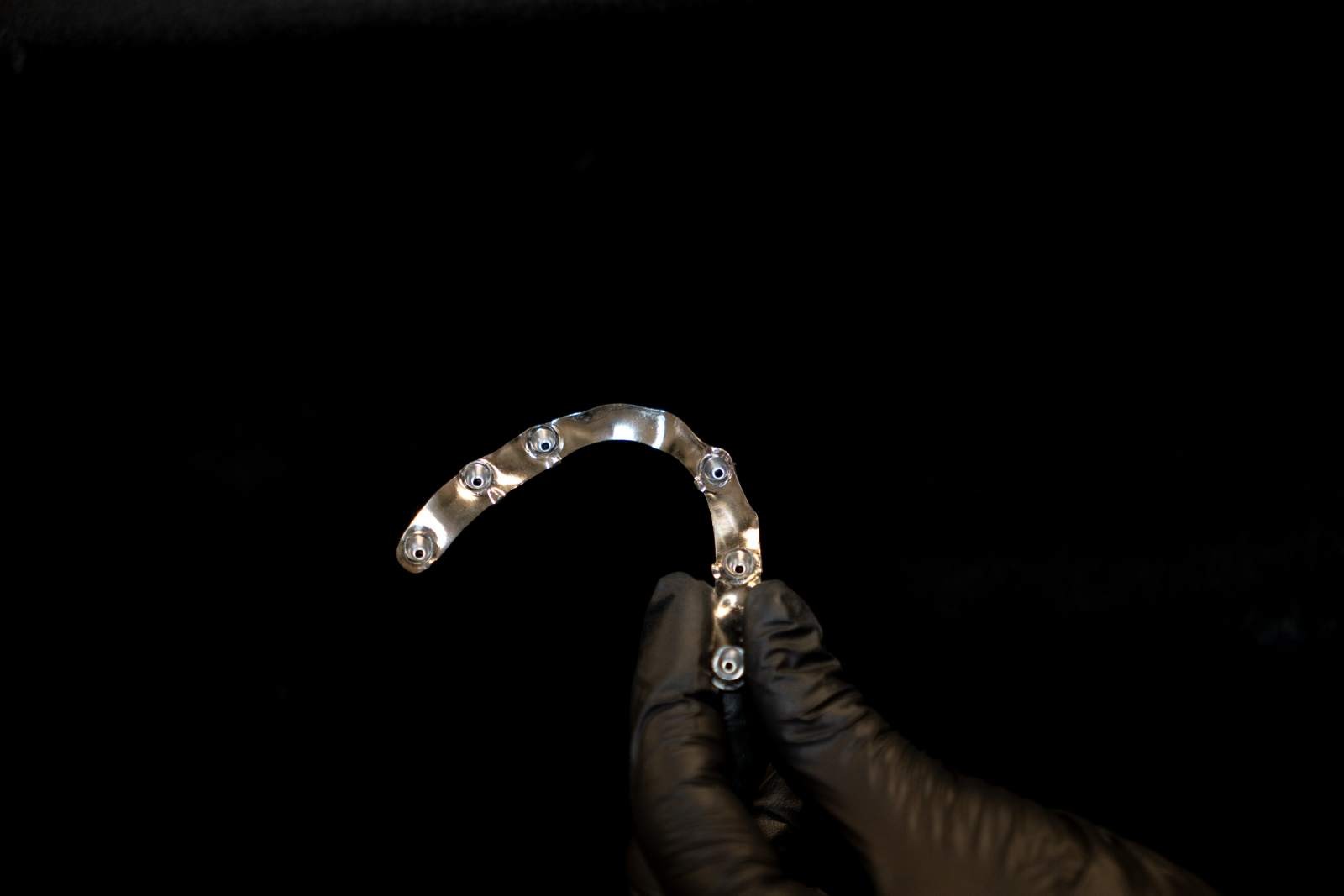
On the other hand, All-on-X MD systems are a traditional yet reliable structure built on a laser-sintered titanium or cobalt-chrome metal framework. While the metal substructure gives the restoration flexibility, the ceramic layers applied on top complete the aesthetic integrity. The metal frameworks prepared at Maestro are produced to minimize stress on implants by passing micron-level passive fit tests.
Strength and Biomechanical Behavior: Rigidity vs. Flexibility
From a biomechanical standpoint, All-on-X MD restorations distribute heavy chewing loads more evenly between implants, especially in the posterior regions, thanks to their high elastic modulus. The metal framework tolerates the risk of deformation in long spans (cantilever) better than zirconia. This feature makes metal-supported systems safer for patients with a history of bruxism (teeth grinding) or very strong masticatory muscles.
Zirconia (All-on-X ZR), on the other hand, is a highly rigid material. It can withstand high pressure, but it has no room to "flex." Therefore, occlusal planning in zirconia cases must be carried out with millimetric precision. The substructure technicians at Maestro Dental Laboratory custom-configure the connector areas and material thickness according to the biomechanical needs of the case to prevent stress accumulation in zirconia designs.
Aesthetics and Optical Parameters in Smile Design
All-on-X ZR is the undisputed leader for patients with the highest aesthetic expectations and a high smile line. Its lack of metal substructure completely prevents gray show-through at the gingival margin. When zirconia's natural translucency is combined with pink aesthetics (gingival porcelain), the result is indistinguishable from a natural tooth structure.
In metal-supported (All-on-X MD) systems, however, aesthetic success depends on the quality of the porcelain applied and the technician's craftsmanship. Yet because of the opacity of metal, the play of light may not be as deep as with zirconia. Maestro technicians use special masking techniques (opaker management) in metal-supported cases to absorb the gray reflection of the metal and aim for the most natural finish possible.
The Critical Role of the Lamination and Substructure Technician in the Process
The success of All-on-X systems is directly linked to the vision of the expert technician in the laboratory. At Maestro Dental Laboratory, our veneer and implant departments work in coordination. In an All-on-X ZR case, our technician does not merely polish the tooth coming out of the milling machine; they characterize the tooth's mamelon structures, incisal translucency, and surface texture by hand.
The digital design technician positions the screw access openings on the occlusal surface in a way that is least noticeable and does not impair function, according to the implant positions. This technical precision makes the clinician's try-in in the office easier while improving patient comfort in use. The technician's knowledge of materials is the main factor that determines how many millimeters of porcelain support should be left in which area.
Selection Guide by Clinical Indications
The following criteria should be considered when selecting a case:
All-on-X MD Should Be Preferred:
- Severe bruxism cases.
- Arches requiring very long "cantilever" (free-end extensions).
- Presence of metal-supported restorations or natural teeth in the opposing arch.
- Situations where implant positions are far from the ideal angulation.
All-on-X ZR Should Be Preferred:
- High aesthetic demand and thin gingival biotype.
- Patients with metal allergies.
- The search for maximum biocompatibility and a tissue-friendly solution.
- Presence of zirconia restorations in the opposing arch.
Maestro Dental Laboratory Perspective:
Each All-on-X case is a unique engineering project for us. We guide our clinicians in material selection by offering not only technical production, but clinical consultation and technician support. By combining our 5-axis precision machines in our CAD/CAM fleet with the artistic touch of our master technicians, we focus on the goal of "zero error".
Conclusion
In short, All-on-X MD is the fortress of durability and safety; All-on-X ZR is the pinnacle of aesthetics and biological harmony. As Maestro Dental Laboratory, we provide the highest quality standards in both systems and produce the "best patient-specific solution" in coordination with our clinicians. When a properly planned substructure comes out of the hands of a master technician, the true success of implant treatment is revealed.

" height="19px" id="G001Zjy9X" transform="translate(3 3)" width="19px"/></svg>)
