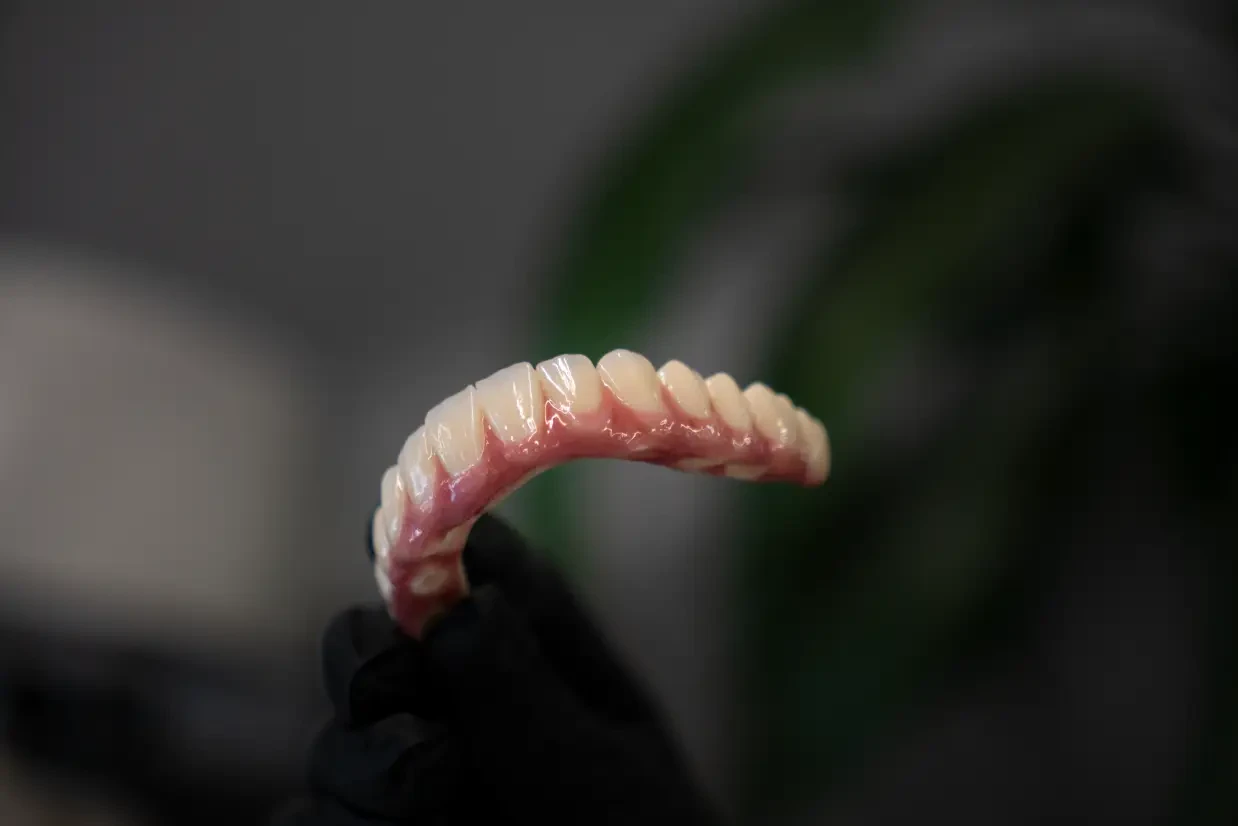
The success of implant-supported restorations is measured not only by aesthetic appearance, but also by the biomechanical stability of the system. Among the complications most frequently encountered by clinicians and patients in clinical practice, screw loosening and the resulting mechanical fatigue often stem from the prosthesis lacking "passive fit" on the implants. Passive fit is the condition in which, when the prosthesis is placed on the implants, it creates no static stress (tension) in the surrounding tissues, screw channels, or implant body. As Maestro Dental Laboratory, we treat this issue not as a "manufacturing defect" but as an "engineering discipline"; with our digital workflow and precise calibration protocols, we eliminate the factors that lead to screw loosening at the laboratory stage.
The Biomechanical Origin of Screw Loosening and the Importance of Passive Fit
Screw loosening usually occurs when the "preload" force is overcome by the dynamic forces generated during chewing. If the prosthetic framework does not fit the implant platforms perfectly, even at the micron level, tightening the screws causes the framework to pull the implants toward each other or push them apart. This creates constant stress on the system and a "spring effect." When chewing forces act on this stressed structure, frictional resistance on the screws decreases and the result is inevitable screw loosening, or even screw fracture.
Ensuring passive fit is critically important, especially in multi-unit bridges such as All-on-X. The frameworks we produce at Maestro Dental Laboratory are designed to fully comply with passive fit criteria such as the Sheffield Test. The fact that, by tightening a single screw, all the other supports of the prosthesis remain immobile and gap-free on the platform is the quality standard of every implant-supported restoration that leaves our laboratory.
Laboratory Solutions: From Traditional Casting to Digital Precision
The shrinkage (contraction) risk of metal encountered in traditional casting methods is the most fundamental factor that disrupts passive fit. At Maestro Dental Laboratory, we eliminate this risk entirely with CAD/CAM and Laser Sintering technologies. Our computer-controlled milling machines machine the connection interfaces with micron-level precision using the original data in the implant libraries.
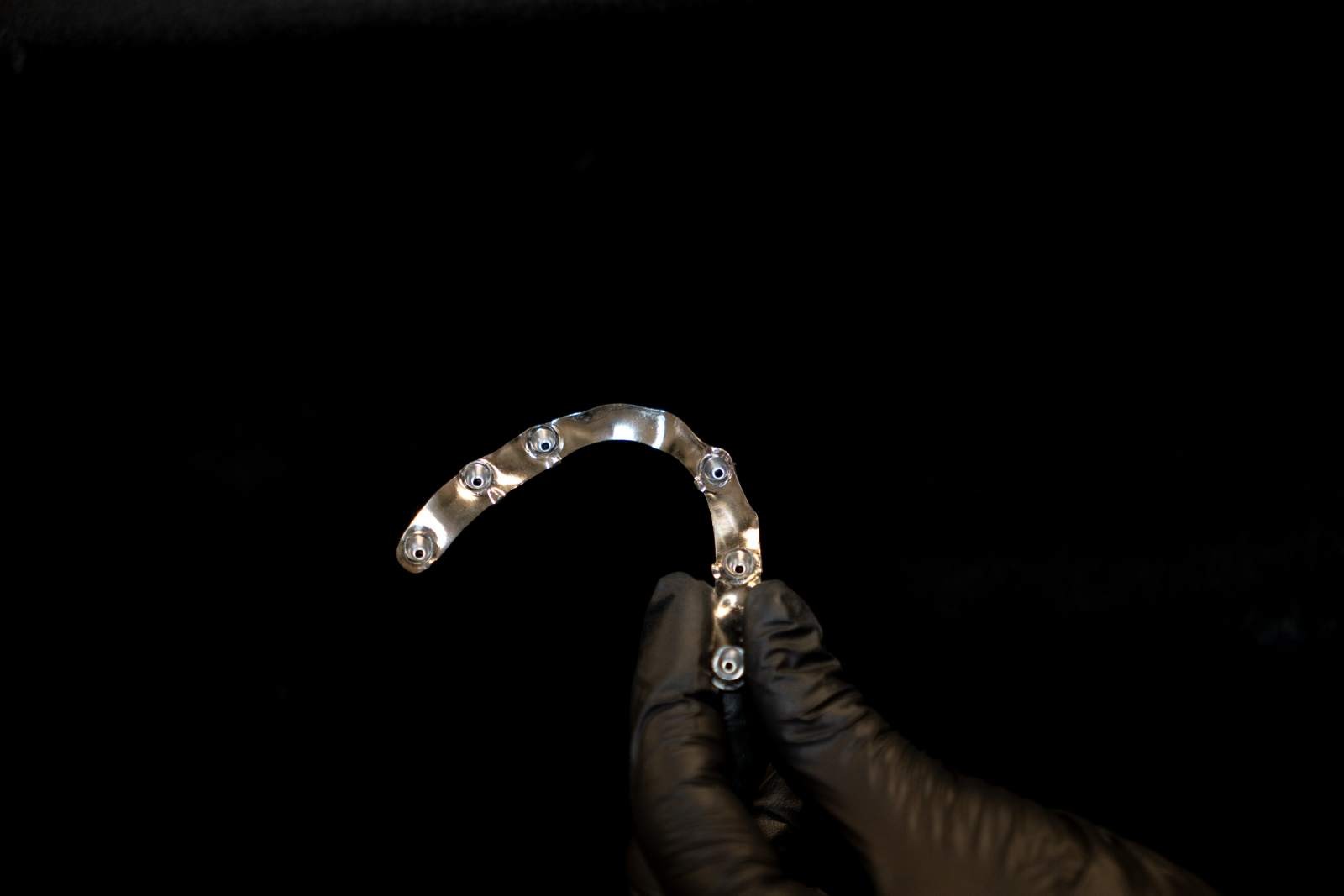
Thanks to the Digital Verification Jigs (Verification Jigs) we use in our digital workflow, we test the accuracy of the intraoral scan data received from the clinician in the laboratory setting. If a deviation occurs during scanning, we contact the clinician before finalizing the design and correct the error at its source. This proactive approach not only prevents screw loosening, but also preserves the biomechanical health of the bone around the implant.
The Role of Ti-Base and Using Original Components
One of the most effective laboratory solutions for preventing screw loosening is the use of a Ti-Base (Titanium Base). Instead of placing zirconia framework directly into the implant, using prefabricated titanium interfaces that are 100% compatible with the implant brand stops wear in the screw channel and micromechanical movements. As Maestro Dental Laboratory, we benefit from the stability provided by the metal-to-metal connection (implant-titanium base) by using high-tolerance, certified Ti-Base systems.
Our technicians perform the bonding between the Ti-Base and the superstructure (zirconia) with special devices and adhesive protocols, eliminating the risk of leakage or separation at the connection area. In this way, the "screw loosening-peri-implantitis" cycle that could develop in the long term is prevented.
Technician Expertise: Final Check and Occlusal Planning
No matter how advanced the technology is, the final authority that confirms passive fit is the expert dental technician. Maestro's experienced team of technicians examines every framework produced under a microscope on the "master model". The cleanliness of the screw channels, the smoothness of the platform surface, and the slightest shift the screw creates in the framework when torqued all pass through our technicians' precise inspection.
In addition, during occlusal planning, forces are ensured to come parallel to the long axis of the implants. A design in which lateral forces are minimized reduces the load on the screws and extends the system's lifespan. At Maestro, every case is concluded not only as an aesthetic success, but also as an engineering success.
Technical Note: Screw loosening is not fate; it is the result of insufficient passive fit. As Maestro Dental Laboratory, with our digital libraries and precise production protocols, we offer our clinicians restorations with guaranteed passive fit, in a "plug-and-play" convenience.
Why Should Maestro Solutions Be Preferred?
For our clinicians, the greatest cost is the revision time the patient spends in the chair. Thanks to Maestro's passive fit guaranteed solutions, we minimize the rate of cases that return with complaints of screw loosening. If you are also tired of mechanical complications in your implant-supported prostheses and are looking for the assurance of digital precision, it is time to meet Maestro Dental Laboratory's technician expertise and technological infrastructure.

" height="19px" id="G001Zjy9X" transform="translate(3 3)" width="19px"/></svg>)
