
How to Plan Pink Esthetics (Gingival Porcelain) in Cases of Severe Bone Resorption
One of the greatest challenges clinicians and dental laboratories face in full-arch implant restorations is managing severe alveolar bone and soft tissue loss.
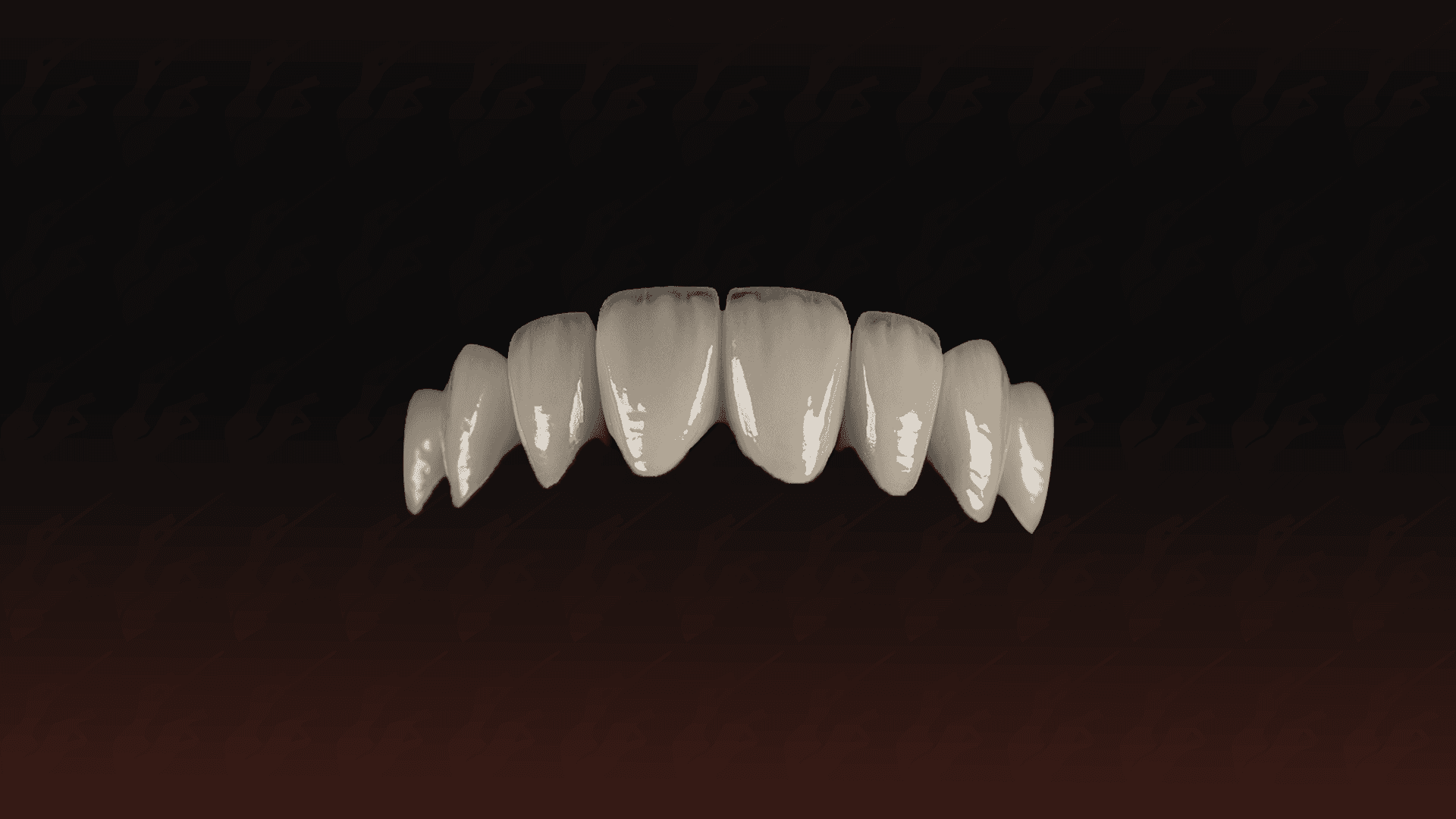
In these cases, achieving excellent white esthetics (tooth shape and appearance) alone is not enough. Restoring the lost tissue volume while carefully defining the limits of pink esthetics (gingival porcelain) is essential for creating a natural-looking smile, maintaining proper function, and ensuring long-term prosthetic success.
1. Establish the Vertical Dimension and Lip Support
Patients with advanced bone resorption often experience loss of upper lip support, resulting in a collapsed facial profile and a deeper nasolabial angle. The first step is to establish the correct vertical dimension and restore adequate lip support.
Laboratory Perspective: Based on the clinician’s wax-up or mock-up, the laboratory determines the amount of gingival material required to restore facial support. At Maestro DentalLab, advanced digital simulations are used to evaluate facial symmetry and precisely calculate the ideal volume of gingival porcelain for each patient.
2. Hide the Transition Line Within the Smile
The most critical aspect of pink esthetics is the transition between the patient’s natural soft tissue and the artificial gingiva. This junction should remain invisible during smiling.
Clinical Guideline: When the patient displays a full smile (high smile line), the transition between natural tissue and gingival porcelain should ideally remain at least 1–2 mm above the visible smile line. In cases of extreme resorption where this cannot be achieved, surgical ridge reduction (osteotomy) may be required to create sufficient restorative space and conceal the transition.
3. Design a Smart Framework and Define Material Boundaries
Severely resorbed arches require larger prosthetic volumes, making the balance between strength and weight especially important. The design of the supporting framework directly affects the success of the gingival restoration.
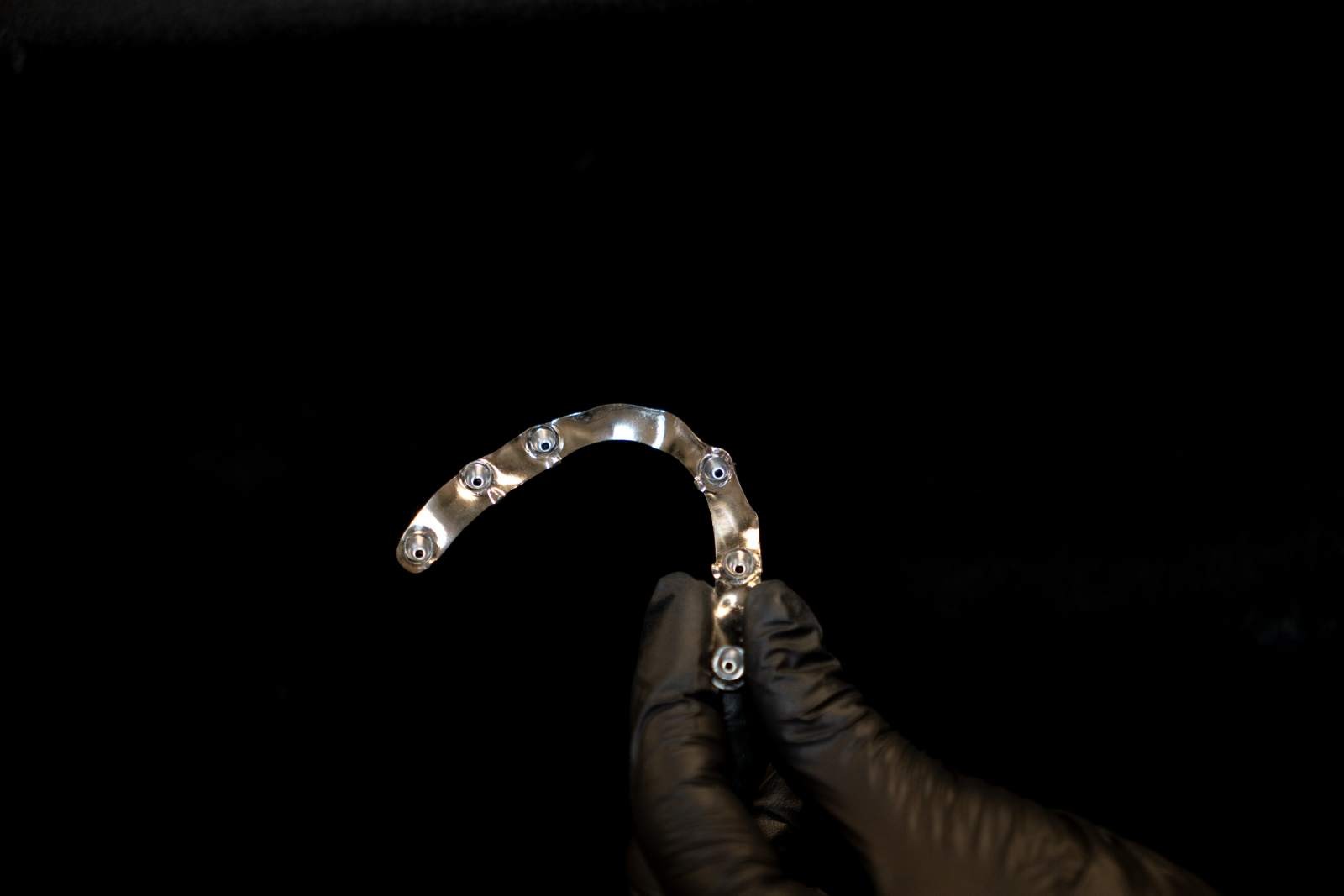
Laboratory Perspective: Whether using titanium, cobalt-chromium, or PEEK frameworks, clear finish lines should be incorporated to support the gingival porcelain or composite. Framework margins should avoid extending into thin interdental papilla areas and should allow smooth, cleansable transitions to minimize plaque accumulation.
4. Prioritize Hygiene Through Proper Emergence Design
Over-contouring the artificial gingiva in an attempt to mimic natural papillae can create inaccessible areas that are difficult to clean, increasing the risk of peri-implant disease.
Clinical Guideline: The tissue-contacting surface should avoid a ridge-lap design. Modified pontic contours or gently flattened surfaces promote easier cleaning. Gingival contours should also provide sufficient embrasure space for interdental brushes and floss to maintain long-term peri-implant health.
5. Reproduce Natural Gingival Color and Anatomy
The success of pink esthetics depends not only on shape but also on realistic color transitions. A single shade of pink often produces an artificial appearance.
Laboratory Perspective: Experienced ceramists use layered gingival porcelain or gingival composite systems to recreate the subtle differences between free gingiva, attached gingiva, and alveolar mucosa. Variations in color, translucency, vascular effects, and melanin pigmentation can be incorporated to closely replicate each patient’s natural soft tissue.
Conclusion
Planning pink esthetics in cases of severe bone resorption requires balancing three essential factors: natural esthetics, biomechanical durability, and long-term hygiene.
In advanced full-arch implant restorations, where precision is critical, Maestro DentalLab combines expert craftsmanship with advanced digital CAD/CAM technology to transform accurate clinical records into highly predictable restorations. When precise impressions, occlusal records, photographs, and clinical information are combined with the expertise of our dental technicians, even the most challenging pink esthetic cases can be restored with confidence, accuracy, and exceptional esthetic results.

" height="19px" id="G001Zjy9X" transform="translate(3 3)" width="19px"/></svg>)
