
Every patient is unique, but certain restorative cases present significant clinical and technical challenges that demand seamless collaboration between the clinician and the dental laboratory.
At Maestro DentalLab, our fully digital workflow enables us to deliver predictable, precise, and reliable outcomes—even in the most complex restorative cases.
In this case study, we follow the complete digital rehabilitation of a patient presenting with severe vertical dimension loss, anterior crowding, and occlusal discrepancies.
⸻
1. Digital Data Collection and Alignment
The treatment process began with the transfer of intraoral scan (IOS) STL files, high-resolution facial and smile photographs, and centric occlusion records to our laboratory.
Laboratory Workflow
Using Exocad, the digital models were accurately aligned with the patient’s facial photographs. This facially driven design approach allowed us to establish the correct occlusal plane according to the patient’s natural facial anatomy, significantly reducing the risk of esthetic discrepancies that may occur with conventional model-based workflows.
⸻
2. Digital Smile Design and Virtual Articulator Planning
Re-establishing the patient’s lost Vertical Dimension of Occlusion (VDO) was one of the most critical stages of treatment. An inaccurate increase in VDO may lead to temporomandibular joint (TMJ) complications, functional discomfort, or ceramic fractures.
Laboratory Workflow
The patient’s lateral and protrusive mandibular movements were simulated using a virtual articulator. A Digital Wax-Up was then created to establish an esthetically pleasing smile while achieving a balanced and functional occlusion.
⸻
3. PMMA Mock-Up and Clinical Validation
Before fabricating the definitive restorations, the proposed treatment had to be clinically validated.
Laboratory Workflow
High-strength PMMA provisional restorations were milled using our CAD/CAM systems based on the approved digital design. The patient wore these provisionals for approximately three weeks, allowing the clinician to evaluate:
• Speech (phonetics)
• Masticatory function
• Muscular adaptation
• Esthetics
• Overall patient comfort
Once both the clinician and the patient confirmed the new vertical dimension and functional performance, treatment proceeded to the definitive restoration phase.
⸻
4. Material Selection and CAD/CAM Manufacturing
Material selection was based on both functional demands and esthetic expectations.
• High-strength Monolithic Zirconia was selected for the posterior region.
• Highly translucent Multilayer Zirconia was chosen for the anterior region to maximize natural esthetics.
Laboratory Workflow
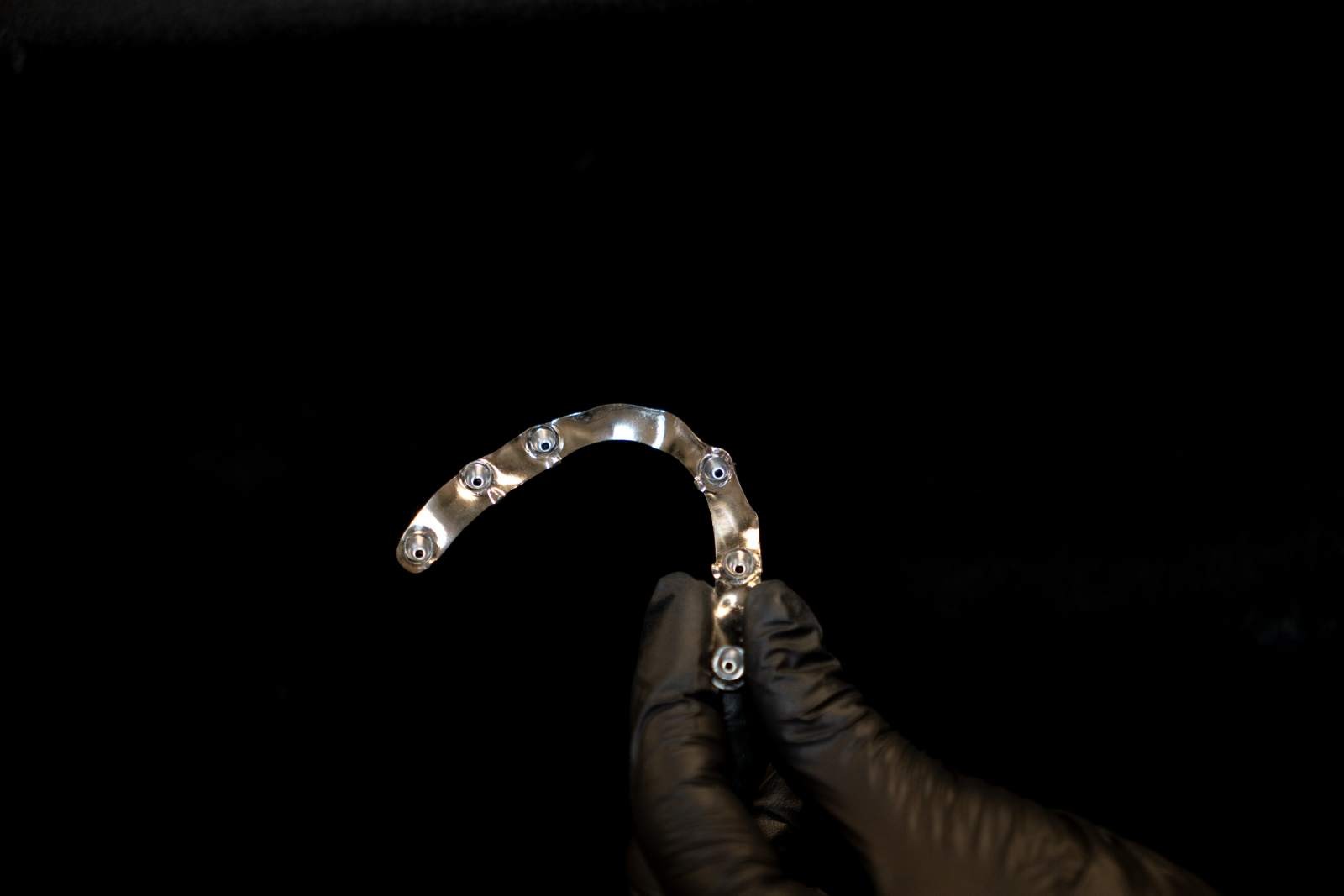
The approved PMMA design was digitally duplicated and transferred directly to zirconia discs. Using high-precision CNC milling technology, each restoration was manufactured with micron-level accuracy before undergoing a carefully controlled sintering protocol to achieve optimal strength and dimensional stability.
⸻
5. Ceramic Characterization and Final Esthetics
While digital technology delivers exceptional precision, creating restorations that truly mimic natural teeth still relies on the expertise of skilled dental technicians.
Laboratory Workflow
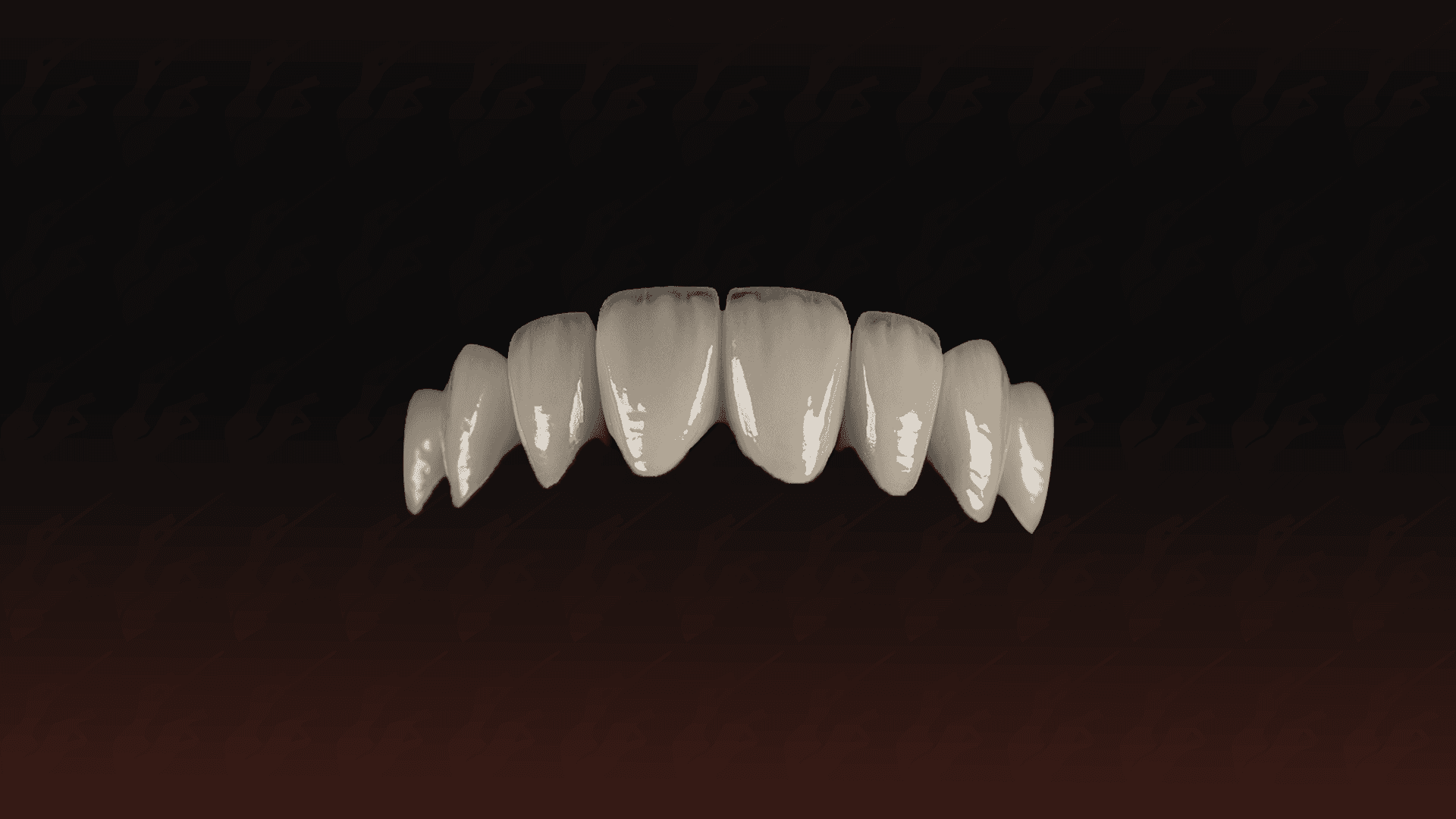
Our master ceramists individually characterized each restoration by incorporating natural surface texture, incisal translucency, internal staining, developmental grooves, mamelons, and gingival transitions. These artistic refinements recreated the depth, vitality, and fluorescence of natural enamel, resulting in restorations that blend seamlessly with the patient’s dentition.
The Result: Minimal Chairside Adjustments, Maximum Precision
When the definitive restorations were delivered, the clinician completed cementation with virtually no significant occlusal or marginal adjustments. The accuracy achieved throughout the digital workflow translated into a smooth clinical delivery, reduced chair time, and highly predictable outcomes.
Successful rehabilitation of complex restorative cases depends on far more than high-quality materials. It requires accurate diagnosis, comprehensive digital data, precise CAD/CAM manufacturing, and close collaboration between the clinician and the dental laboratory.
At Maestro DentalLab, we combine advanced digital technology with technical expertise and artistic craftsmanship to help clinicians achieve consistent, predictable, and esthetically exceptional restorative results.
For complex restorative cases, trust Maestro DentalLab’s fully digital workflow to deliver precision, efficiency, and confidence at every stage of treatment.

" height="19px" id="G001Zjy9X" transform="translate(3 3)" width="19px"/></svg>)
